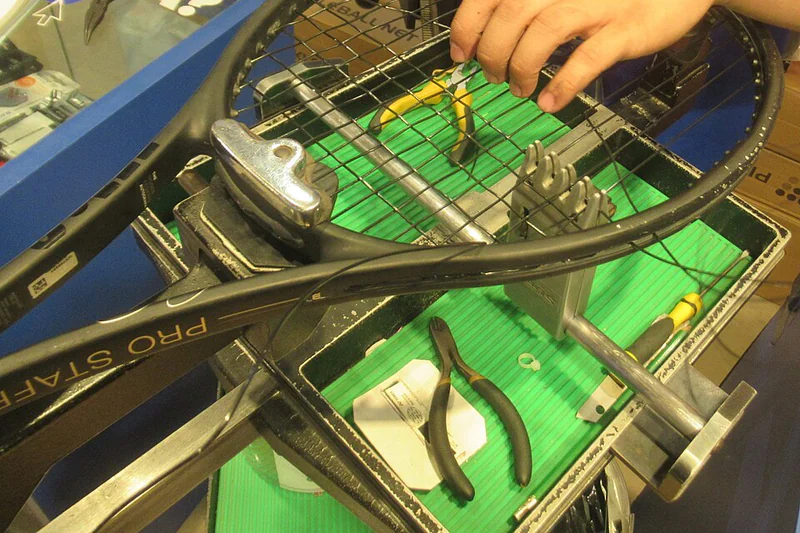
Polyester inside a multifilament: how to read Triax before choosing a hybrid
Separate what is inside the string from where you install it. That distinction makes the product description, diameter choice and stringing order much easier to use.

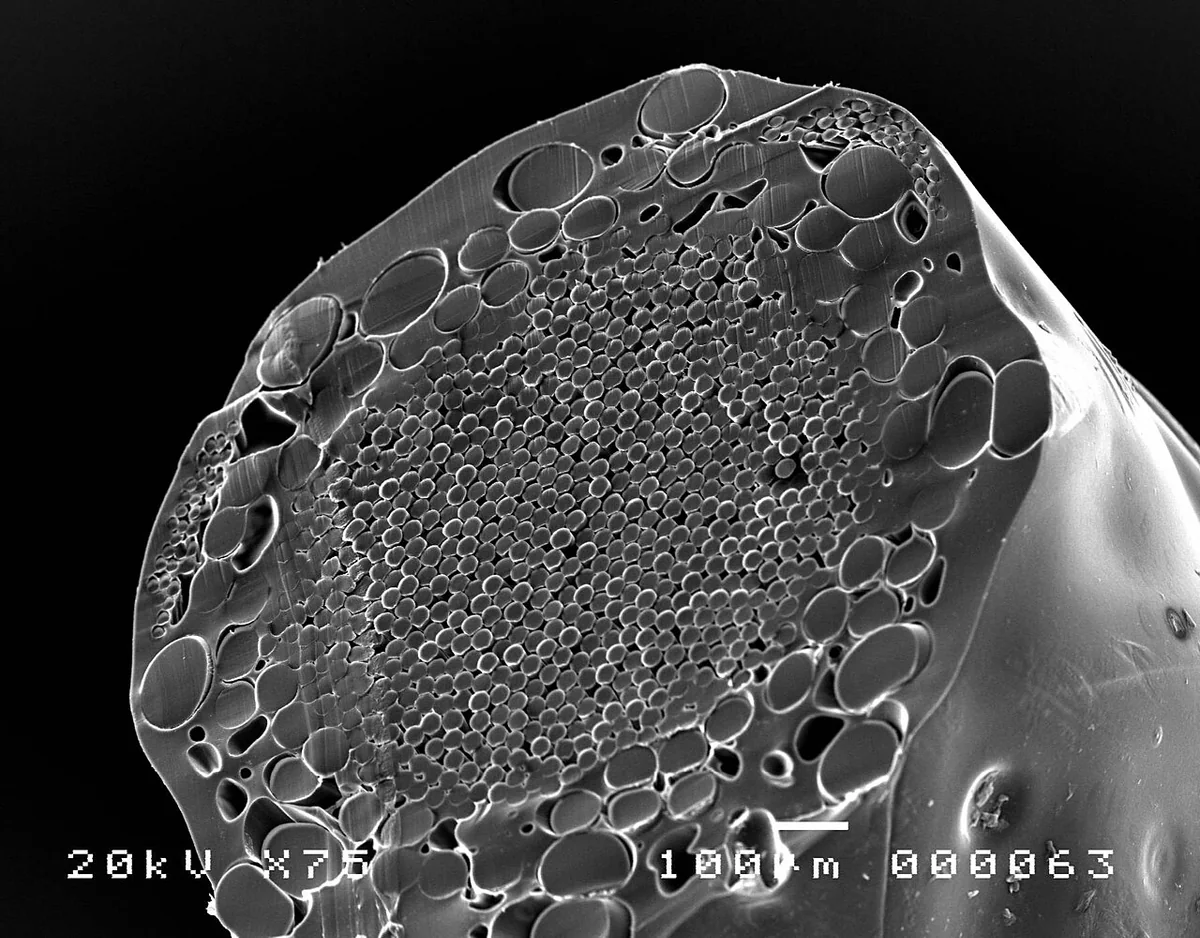
Polyester and multifilament can appear together in the same product description. Tecnifibre calls Triax a co-polyester multifilament: the material name identifies part of the fibre composition, while multifilament describes a construction made from multiple filaments. A shopper filtering only for polyester could therefore place this string beside products with a very different internal structure. Read the material and construction fields together.
The manufacturer’s pages checked on October 18, 2026 list co-polyester, polyamide, high-density polyurethane and an S.P.L coating. They also offer 1.28, 1.33 and 1.38 mm diameters. These details are useful before comparing promises about control or comfort: they identify the actual product you would buy, and help distinguish a change of string family from a change of thickness within Triax.
Four parts of the description have different roles
| Part | Manufacturer’s stated role | What to record |
|---|---|---|
| Co-polyester, T.P.I | Firm feel and durability | Material in the multifilament construction |
| Polyamide | Tolerance on off-centre contact | Another constituent of the string |
| PU HD | Polyurethane used with the firmer fibres | The binding material identified by the manufacturer |
| S.P.L coating | Abrasion resistance and string sliding | A surface treatment, separate from fibre composition |
Co-polyester describes a constituent, rather than the number of filaments. Polyamide is another material in the manufacturer’s construction description. Polyurethane is listed alongside those fibres, and the coating is described separately as a surface treatment. Keeping those roles separate prevents a coating claim from becoming a claim about the entire core, or a fibre name from standing in for the whole construction.
The maker’s Triax history also separates a polyester-fibre multifilament milestone in 2000 from a co-polyester-fibre multifilament milestone in 2020. That is the brand’s own development timeline. It explains why its descriptions distinguish polyester from co-polyester even when both products sit within the broader multifilament category. A shared shelf label can contain different material combinations.
Duramix provides a useful nearby example. Tecnifibre describes it as a blend of 50 percent polyamide fibres and 50 percent polyester fibres, impregnated with polyurethane. Those percentages belong to the stated fibre blend. Triax’s reviewed pages identify its materials without giving the same numerical recipe, so the Duramix proportions remain attached to Duramix rather than becoming a family-wide formula.
A blend inside one string and a hybrid installation
A full bed of Triax uses that product in both mains and crosses. Its constituent materials are already combined inside the manufactured string. A two-string hybrid is a separate installation choice: one selected product runs in the mains and another in the crosses. You could use Triax in a hybrid, but buying a material blend does not itself specify a two-product installation.
For an order, write two position lines even when they are identical. For example, “mains: Triax 1.28 mm; crosses: Triax 1.28 mm” describes a full bed clearly. A hybrid order replaces one line with the actual partner product and its diameter. Add the reference tension for each position as agreed with the stringer, using the racquet’s applicable guidance and your previous installation as context.
Choose the first question you want to answer. If you want to understand how Triax behaves as a complete string setup, a full bed keeps the product identity consistent across the frame. If you already know your preferred main string and want a different cross string, keep the mains unchanged and specify Triax only in the cross position. Those purchases investigate different equipment choices.
A change from a full polyester monofilament bed to a Triax hybrid changes both construction and the arrangement of products. Keep the previous order in the record so that later impressions refer to the actual combination. Writing “softer strings” or “poly hybrid” leaves too many possible products behind those words. Full names and diameters let a stringer reproduce the arrangement you preferred.
The diameter steps are 1.28, 1.33 and 1.38 mm
The current Triax set and reel pages use the same three listed diameters. Moving from 1.28 to 1.33 mm adds 0.05 mm to the nominal diameter; the next step to 1.38 adds another 0.05 mm. These are product-size differences. Record the decimal value on the package rather than relying on a generic gauge category that may use different boundaries in another brand.
Start the comparison with the problem that prompted a change. If your current setup repeatedly breaks at a worn string intersection, keep a photograph of that location and the approximate playing time before breakage. A thicker Triax option is a diameter choice to discuss with the stringer. If the string remains intact but depth or feel has become difficult to manage, record that change separately from breakage.
Avoid making the first trial depend on several unexplained adjustments. Moving to a new material construction, a thicker diameter and a different main/cross arrangement creates three changes in one order. Pick the one most relevant to your question, and record the others if they are necessary. A clear comparison may simply begin with the same racquet and the smallest practical change from the current setup.

Read the wear pattern alongside the hitting record
Use the same ordinary shots that made you reconsider the old setup: a controlled rally for depth, a compact return, or the second serve you rely on in matches. Write the intended target before starting. After similar playing time, note the direction of misses and whether you changed the swing to compensate. The observations then describe a usable task instead of a single unexplained rating.
Inspect the stringbed at those same intervals. A photograph from a consistent angle can show where fibres begin to fray, where intersections wear and whether one area changes faster than the rest. Add that image to the playing-time note. Visible wear and your hitting experience provide different information, so keep both in the record rather than treating either one as a complete service-life estimate.
Tennis Warehouse’s string guidance includes playability as well as breakage in replacement decisions. That distinction matters when evaluating a multifilament with a firmer material component: the purchase should solve the particular response or wear problem you described. A recorded loss of suitable depth or comfort can prompt a conversation with the stringer before the last intact fibre finally separates.
Buy the trial quantity before committing to a reel
Tecnifibre lists a 12 m Triax set and a 200 m reel. Confirm the required cut lengths for the exact racquet and installation before ordering. A hybrid may use only one position of Triax, while a full bed needs both. The nominal package length and the stringer’s actual cutting plan together determine how much is available for the intended work.
The manufacturer’s accompanying video is a product introduction, useful for seeing how the brand presents the construction. Combine that explanation with your written order and observations. A repeat purchase becomes straightforward when the record includes the complete product name, diameter, main/cross position, installation date, playing time and the point at which the setup stopped meeting your needs.
Sources and further reading
Keep reading
Same gut, same poly—why reversing mains and crosses makes a different hybrid
Reversing mains and crosses changed static friction in two TWU hybrid pairings. Understand the contact mechanisms and retain a useful comparison record.
7 min read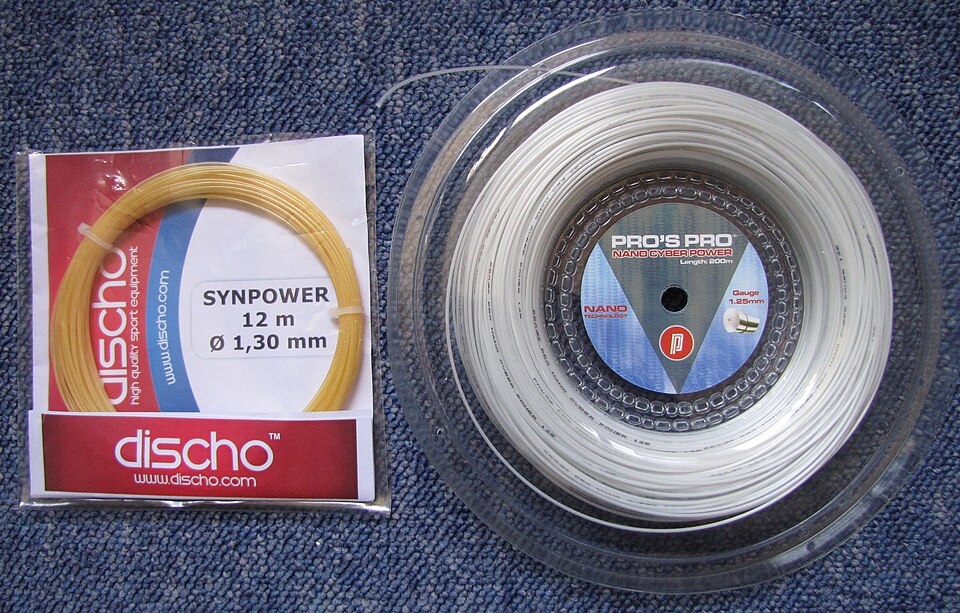
String gauge 1.20 vs 1.25 mm: who should switch and who should wait?
Use Mach-10’s four options and TWU research to choose a gauge through useful ball flight, replacement interval and cost per satisfactory hour.
6 min readREXIS SPEED puts a monofilament component inside a multifilament string
Yonex’s launch description explains the nylon–polyester centre; current SPEED, COMFORT and FEEL listings show why construction, ingredients and intended feel need separate columns.
7 min readTENNIS TENSION LAB
Check your racquet’s tension today.
Get a high-precision tension reading in under 10 seconds. Tension Lab tracks changes from your first reading and helps you see when to restring.
- High-precision tension measurement. Ready in under 10 seconds.
- Track every change in feel. See the full story over time.
- Time to restring? Never leave it to guesswork.