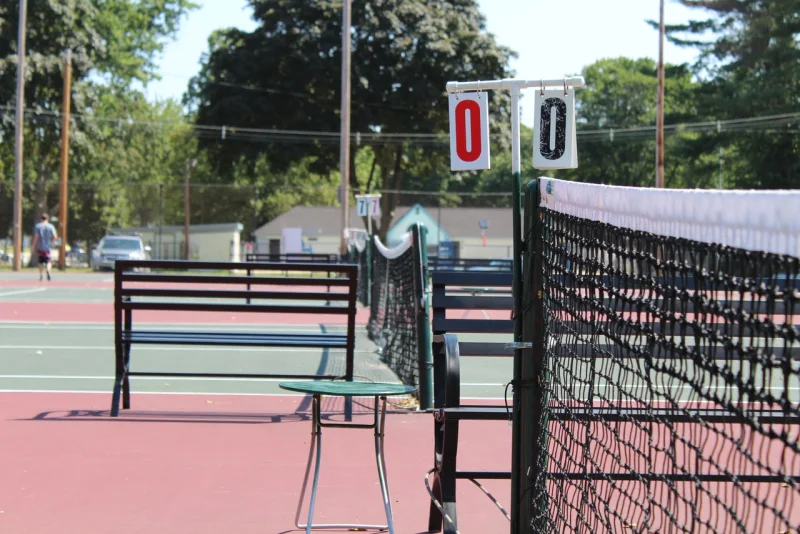
Under standard service-let rules, a serve that touches the net and lands in the correct diagonal service box is replayed. USTA’s service guide calls a net-touching serve outside the box a fault, and also calls a serve hitting a post a fault. Check both the contact and the bounce to decide what follows.
Each point allows two service attempts. A first serve missing the correct box is a fault; a second miss is a double fault and gives the opponent the point. A first-service let repeats the first serve. After a first fault, a second-service let repeats the second serve. The service attempt stays the same after a let.
For example, a first serve clips the net and bounces inside the diagonal box: call let and serve a first ball again. If it lands beyond the box, call fault and move to the second serve. Follow the landing as well as the net touch to handle the two outcomes correctly.
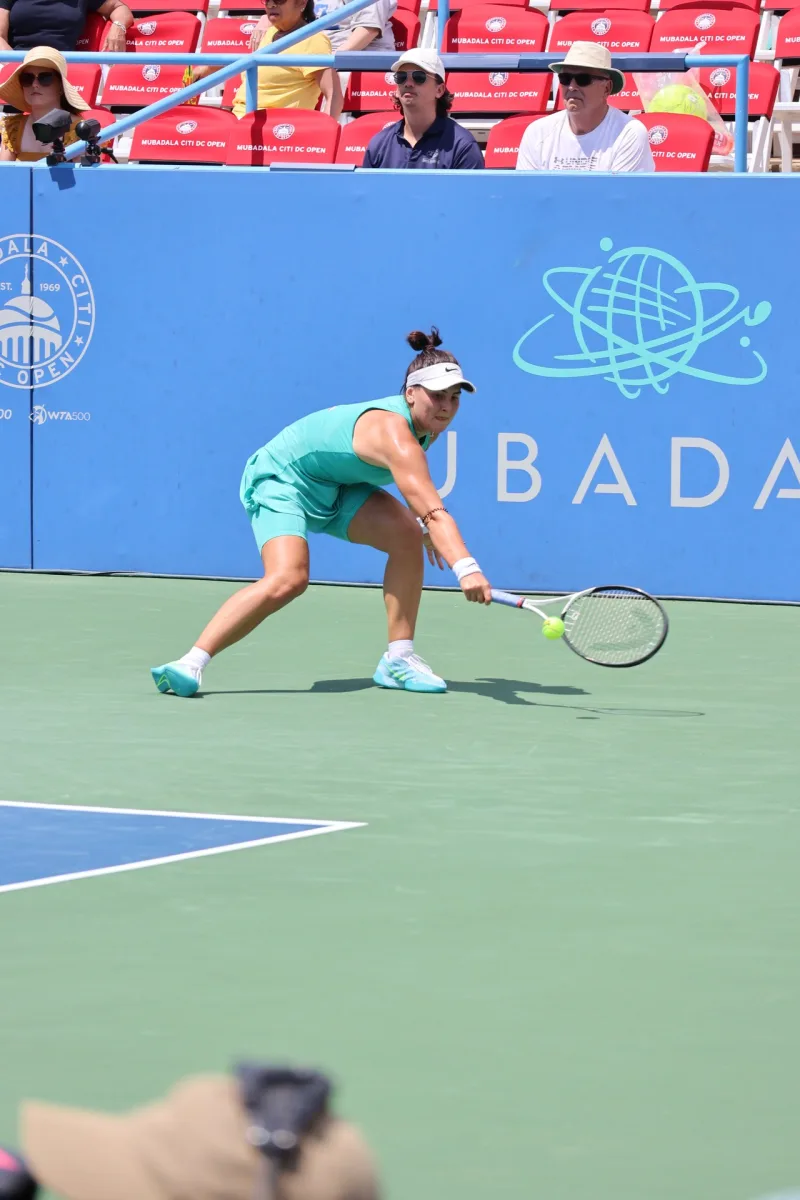
Serve from behind the baseline towards the diagonal box. The first point begins between the centre mark and right sideline, towards the deuce court. After that point, move to the left, ad side. Whether the score is 15-love or love-15, the completed point determines the next service side. Announce the score before taking position.
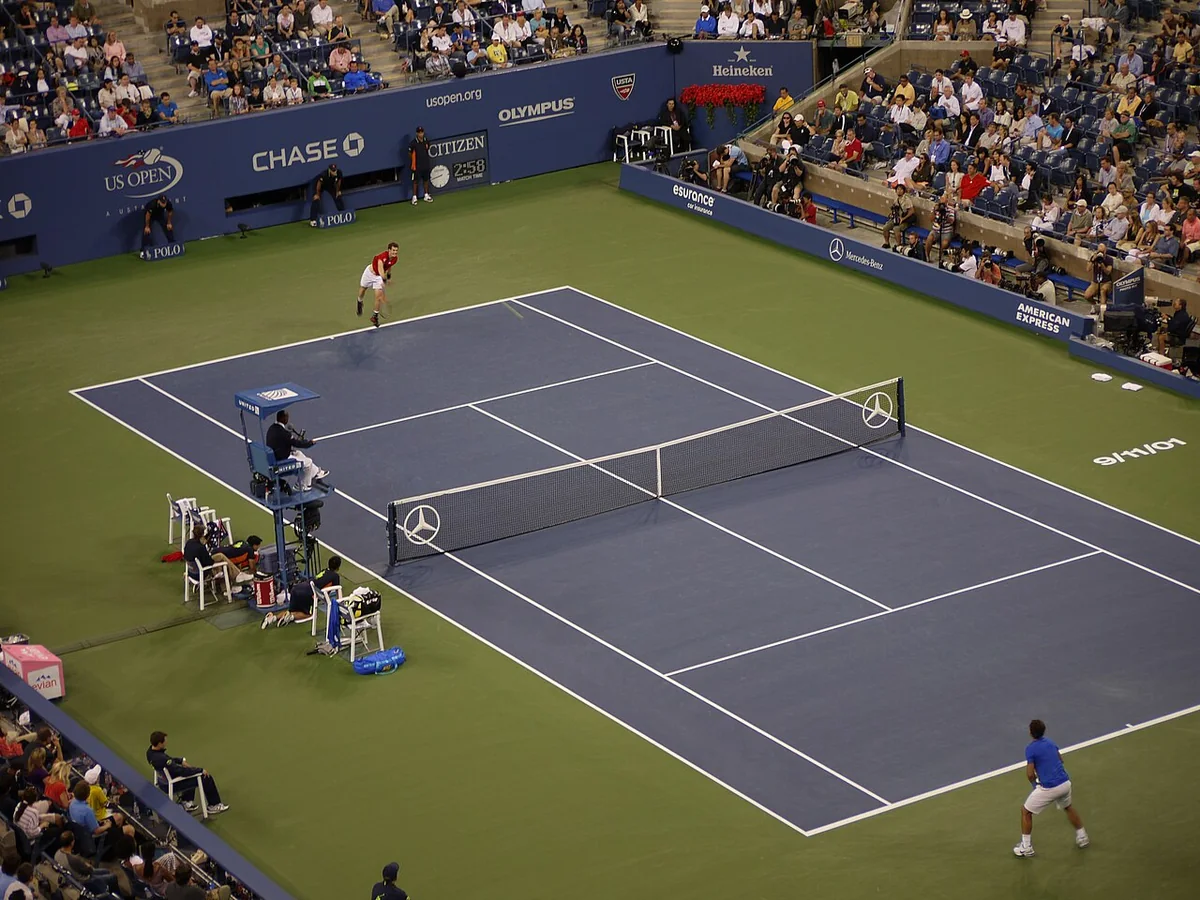
Stepping on or over the baseline before contact is prohibited. Check whether the front foot reaches the line as the body follows the toss. Our practice suggestion is to ask a partner to observe the feet and contact together, or use short clips from a consistent side angle. Establish a repeatable starting position before increasing speed.
Alternating service sides each point follows a different schedule from changing court ends. In an ordinary set, change ends after the first game and then after the third, fifth and subsequent odd-numbered games. Use completed points for the service side and completed games for end changes.
Before playing, rehearse three cases verbally: a net touch into the correct box, a net touch outside, and a second-service let after a first fault. State which serve comes next in each case. This keeps the service count connected to the ruling during an actual point.