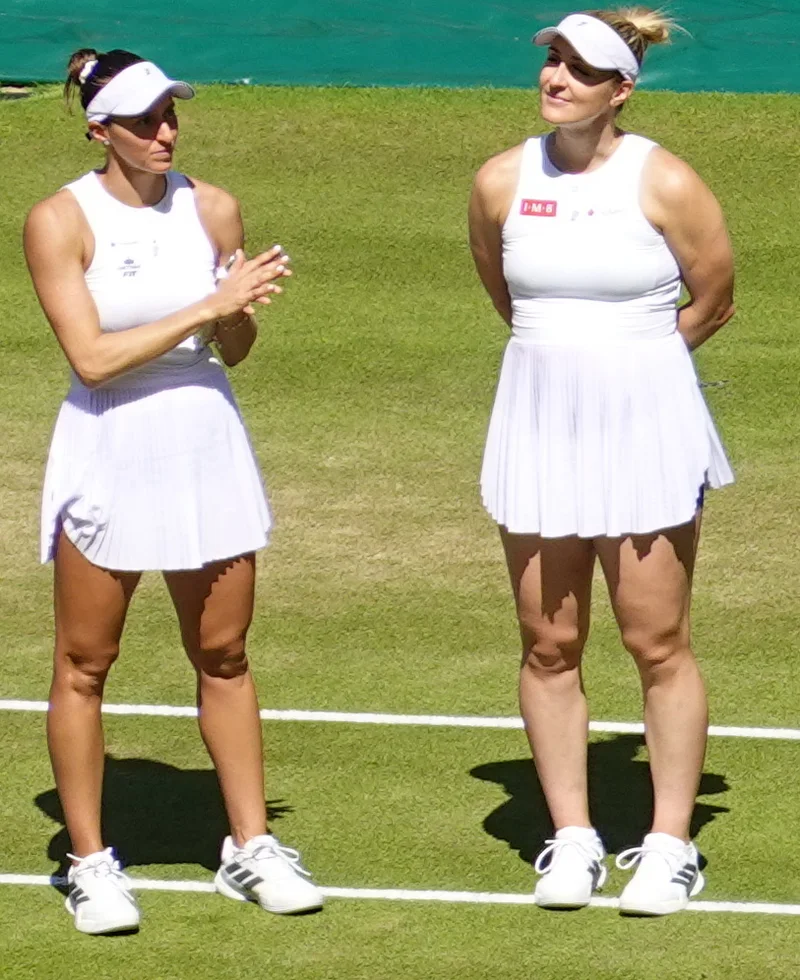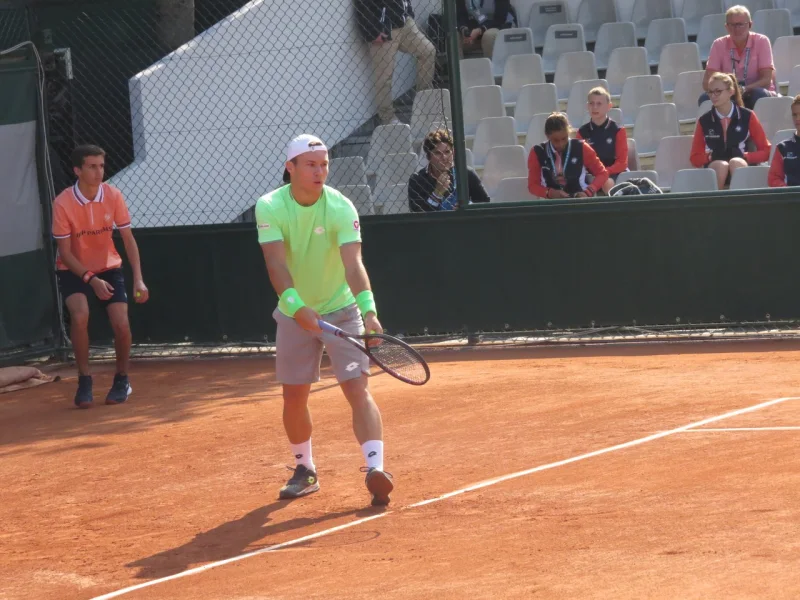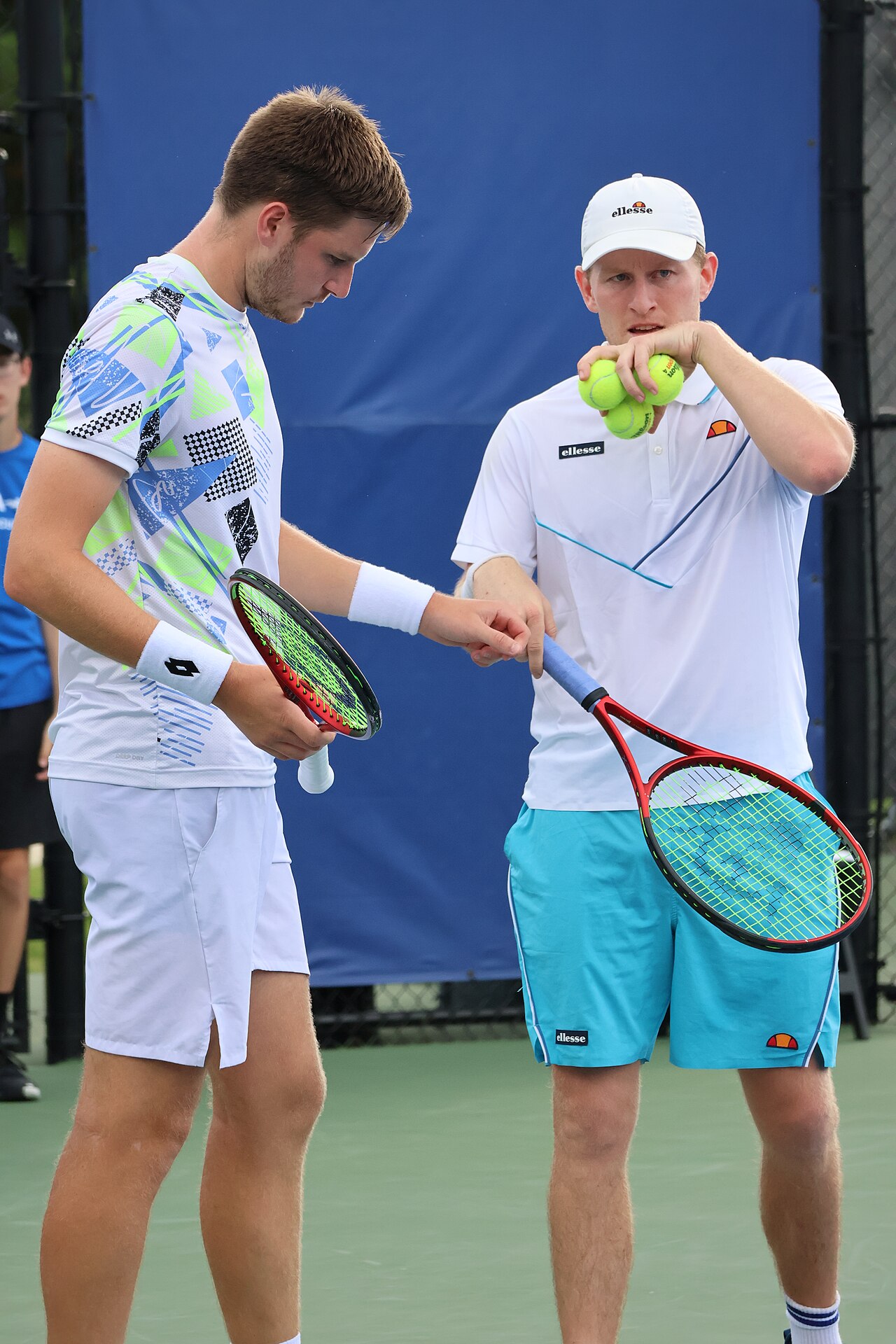
With three players, assign one a half court and the pair the full doubles court so everyone participates in the same point. USTA’s April 2021 game balances the unequal numbers through different playing areas. The first side to five points wins.
The single player starts on the deuce half, defending from the centre of the court to the doubles sideline. The pair has the full doubles width on its side. The single player drops and hits the ball to begin. Before starting, all three should agree which boundaries apply at each end.
After the deuce-side game, the same single player repeats the five-point game on the ad side. Another player then takes the solo role. Rotating by court side, rather than by forehand or backhand labels, makes the sequence clear for a group containing both right- and left-handed players.
The pair has a narrower target and a shared space to cover. When one partner is pulled wide, agree what the other covers and call the next ball before contact. The solo player can choose a direction into the larger opposing court, then recover within the half court. One side practises cooperation while the other works on direction and recovery.
Our session suggestion is to write down the solo rotation and record deuce- and ad-side scores separately. After a circuit, note occasions when both partners chased one ball or the solo player was caught before recovering. Choose the more frequent problem as the focus for the next circuit, giving the score a concrete practice context.
USTA also offers a version with the solo player volleying at the net while the pair hits groundstrokes. Start on the deuce side and rotate after a side reaches five. Use a pace everyone can control at the closer distance, and feed only once the volleyer is ready.
Keep baseline and volley results in separate columns. For baseline points, observe recovery within the half court; for volleys, watch the racket return to a ready position after contact. Repeating the same boundaries and rotation next time makes it easier to identify which role needs more practice.