Equipment for your game
Compare racket balance, inertia and patterns, and assess shoes for braking and landing. Translate specifications into demo notes on contact, depth and fatigue.
Certains articles sont proposés dans leur langue originale, indiquée sur chaque lien. 한국어 · English · 繁體中文
En discuter →
Publication and correction timeline
Source publication, publication on this site, updates and corrections for articles linked to this topic. These are not the times when matches or real-world events happened. Titles and links point to current article editions, not reconstructed historical drafts.
Adrenaline 125: a 1.25 mm gauge and a polymer-led design
The source publication date recorded for this article. It does not mean that every linked source below was published on this date.
Sources linked to this article · 1
ASTREL 105 pairs a 260 g frame with a 16×17 string pattern
The source publication date recorded for this article. It does not mean that every linked source below was published on this date.
Sources linked to this article · 1
2026 Beast 100 and O3 share a pattern but use different holes and parts
The source publication date recorded for this article. It does not mean that every linked source below was published on this date.
Sources linked to this article · 2
Blade 100UL V8: start with 265 g and 335 mm unstrung
The source publication date recorded for this article. It does not mean that every linked source below was published on this date.
Sources linked to this article · 1
Blade 100UL V9: why the specification lists both 265g and 281g
The source publication date recorded for this article. It does not mean that every linked source below was published on this date.
Sources linked to this article · 1
C10 Evo is 20 g lighter than Pro, with balance 15 mm farther forward
The source publication date recorded for this article. It does not mean that every linked source below was published on this date.
A black Clash 100 can be V2 or V3: read beyond the Noir name
The source publication date recorded for this article. It does not mean that every linked source below was published on this date.
Sources linked to this article · 2
FX 500 LS versus FX 500: 15 g less weight, balance 5 mm farther forward
The source publication date recorded for this article. It does not mean that every linked source below was published on this date.
Sources linked to this article · 2
Nylon with a metal film: how DYNAWIRE differs from REXIS COMFORT
The source publication date recorded for this article. It does not mean that every linked source below was published on this date.
Sources linked to this article · 2
EZONE 98 Tour adds 10 g and moves the unstrung balance 5 mm
The source publication date recorded for this article. It does not mean that every linked source below was published on this date.
Sources linked to this article · 3
Focus Hex Plus 25: the 25% elasticity claim compares it with Focus Hex
The source publication date recorded for this article. It does not mean that every linked source below was published on this date.
Sources linked to this article · 1
A square 1.20 mm and two pentagonal gauges: Game Changer versus Tour Sniper
The source publication date recorded for this article. It does not mean that every linked source below was published on this date.
Sources linked to this article · 2
Four gauges for Hyper-G Round, two for the Hybrid System
The source publication date recorded for this article. It does not mean that every linked source below was published on this date.
Sources linked to this article · 2
Inside Lynx Touch: two material regions in one monofilament
The source publication date recorded for this article. It does not mean that every linked source below was published on this date.
Sources linked to this article · 1
A larger strand inside a multifilament: the Multifeel central core
The source publication date recorded for this article. It does not mean that every linked source below was published on this date.
Sources linked to this article · 1
MUSE 100L: 15g lighter, with a different grip-size range
The source publication date recorded for this article. It does not mean that every linked source below was published on this date.
Sources linked to this article · 2
Polyester and nylon inside one string: NXT Control 16 at 1.32 mm
The source publication date recorded for this article. It does not mean that every linked source below was published on this date.
Sources linked to this article · 1
From Phantom Pro 100P to Phantom 100P: the second generation drops Pro
The source publication date recorded for this article. It does not mean that every linked source below was published on this date.
Sources linked to this article · 2
Same 93-square-inch head, four fewer mains: the two 2020 Phantom 93P patterns
The source publication date recorded for this article. It does not mean that every linked source below was published on this date.
Sources linked to this article · 2
Eight sides for REV, five for SPIN: two POLYTOUR profiles
The source publication date recorded for this article. It does not mean that every linked source below was published on this date.
Sources linked to this article · 2

Blade V10 16×19 ou 18×20 ? Choisissez une trajectoire, pas une étiquette.
Les deux plans de cordage de la Blade 98 V10 partagent plusieurs caractéristiques annoncées. Comment comparer espacement des cordes, montages de prêt et trajectoires utiles sans confondre sortie de balle plus haute et supplément de lift.
9 min de lecture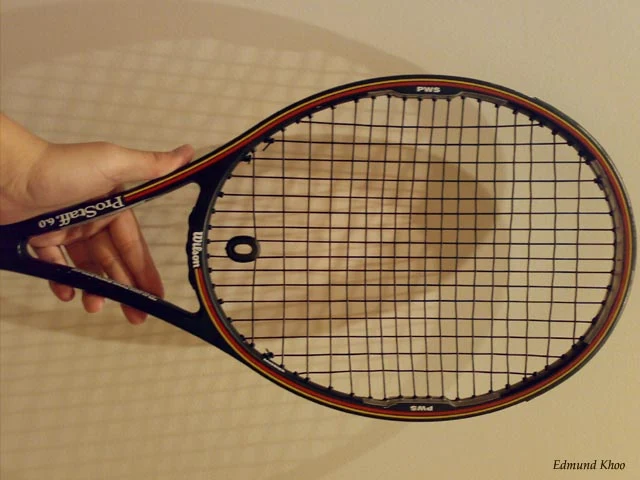
Un tamis plus silencieux protège-t-il vraiment le bras ? Ce que change un antivibrateur
Son, sensations et protection du coude : deux études permettent de distinguer ces questions et de comprendre pourquoi retirer l’antivibrateur avant une mesure de tension.
8 min de lecture
EZONE 98 ou 100 : bien plus que deux pouces carrés de différence
Les Yonex EZONE 98 et 100 de huitième génération diffèrent aussi par leur équilibre et leur profil. Ce que disent les cotes officielles avant de tout attribuer à la taille du tamis.
8 min de lecture
La chaussure de tennis qui accroche le plus n’est pas forcément la meilleure pour vous
Une expérience sur l’adhérence au tennis distingue l’accroche disponible de celle qu’utilise le joueur. Pourquoi surface, charge et rotation comptent davantage qu’un coefficient transformé en note d’achat.
7 min de lecture
Il colle en magasin, puis glisse au deuxième set : le piège du surgrip
Toucher collant et gestion de la transpiration ne sont pas synonymes. Choisissez votre surgrip selon son évolution pendant le match.
7 min de lectureT-Fight 305S ou TF-40 305 : compter les cordes ne suffit pas
Même poids annoncé, même tamis, mais deux projets de conception. Voici ce que les fiches Tecnifibre permettent vraiment de comparer.
7 min de lecture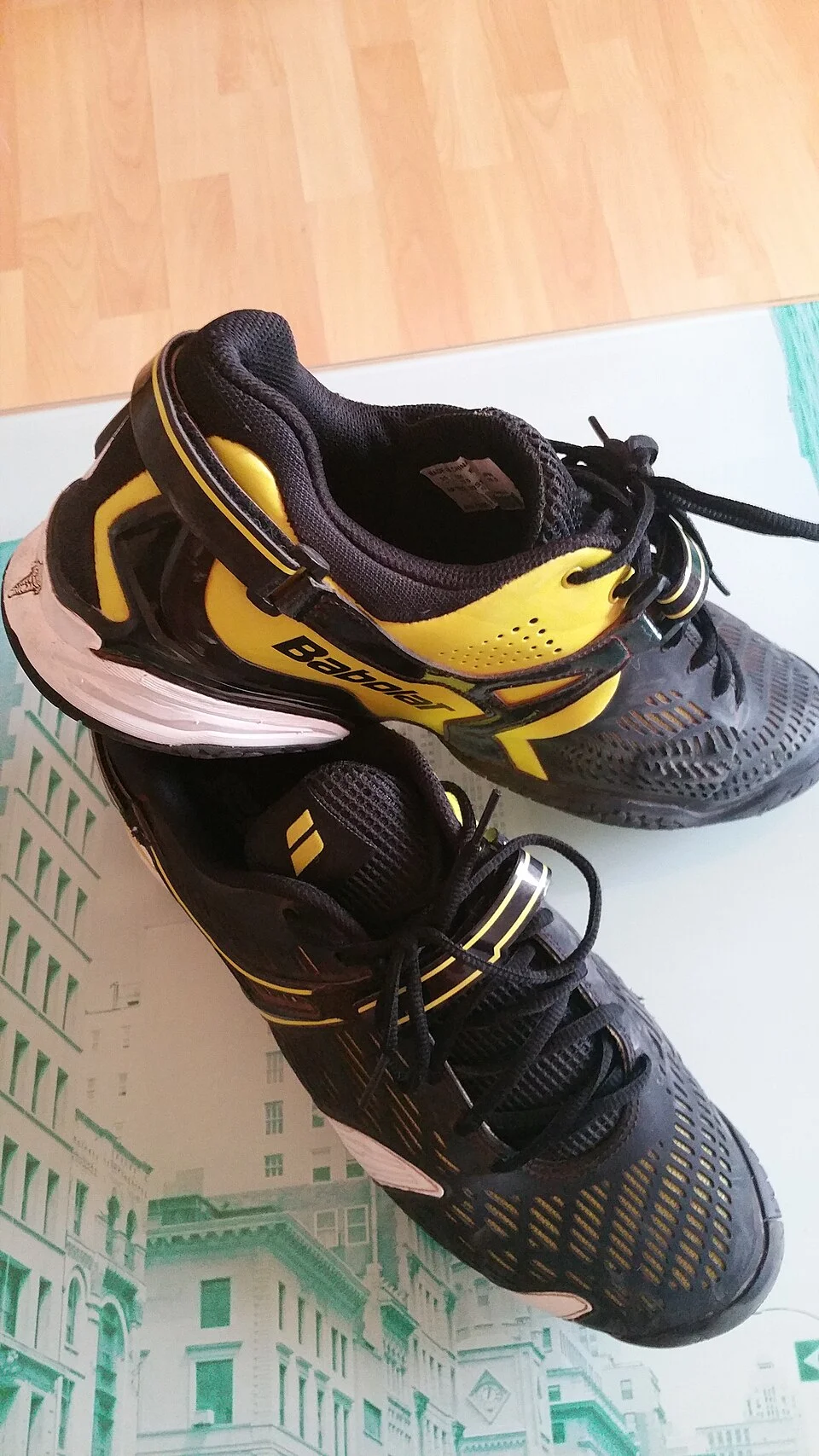
Vos chaussures de tennis semblent moelleuses. Que se passe-t-il au freinage ?
Un talon doux peut convaincre en magasin tout en disant peu sur un coup droit excentré. Ce qu’une étude en laboratoire de 16 chaussures révèle sur amorti, charge à l’avant-pied et stabilité.
8 min de lectureLes deux raquettes annoncent 305 g. Pourquoi l’une arrive-t-elle toujours en retard ?
Un poids annoncé identique ne garantit pas le même swingweight. Lisez ensemble masse, équilibre et résistance à la rotation avant de choisir un cadre ou d’apparier une seconde raquette.
8 min de lecture