Focus HEX and Co Focus: match 1.23 mm before comparing the profiles
A familiar family name can hide a changed diameter, profile or coating. Start with the exact pair you want to compare, then write a stringing order that preserves that question.

MSV gives Co Focus an unusually useful description: the same material as Focus HEX, formed into a round profile. Focus HEX is hexagonal. For a player already comfortable with polyester who wants to compare these two shapes, the manufacturer’s statement identifies a more specific starting point than choosing unrelated strings because both packages promise spin.
Start with the diameter shared by the two products. Their current pages, checked on October 18, 2026, both offer 1.18, 1.23 and 1.27 mm. A 1.23 mm Co Focus against a 1.23 mm Focus HEX keeps the nominal thickness aligned. Switching from a 1.10 mm HEX to a 1.27 mm Co Focus would change thickness as well as product and profile.
The purchasing question is whether either complete string gives you a more useful response in your own frame. The product pages supply material descriptions, shapes and available diameters; a practical comparison can add consistent installation and hitting tasks. Write down whether the desired change concerns depth, compact returns or feel, then choose tasks that reproduce that situation.
Four names, two different diameter schedules
| Product | Profile | Listed diameters |
|---|---|---|
| Focus HEX | Hexagonal | 1.10 / 1.18 / 1.23 / 1.27 / 1.33 |
| Co Focus | Round | 1.18 / 1.23 / 1.27 |
| Focus HEX Soft | Hexagonal | 1.15 / 1.20 / 1.25 / 1.30 |
| Focus HEX Ultra | Hexagonal | 1.10 / 1.15 / 1.20 / 1.25 / 1.30 |
Focus HEX has five listed diameters, extending to 1.10 and 1.33 mm. Co Focus lists three, all of which also appear in the original HEX range. This overlap makes the original pair convenient for a same-diameter comparison. Write the full product name and the decimal size on the order, especially when a shop uses gauge numbers as its main search filter.
Soft and Ultra use a different sequence. Both offer 1.15, 1.20, 1.25 and 1.30 mm; Ultra also lists 1.10 mm. A move from original HEX 1.23 to Soft 1.25 therefore changes the nominal diameter by 0.02 mm. That is a small stated difference, but it belongs in the comparison record alongside the change of model. The shared family name can otherwise conceal it.
MSV describes Soft as 8 percent more elastic than Focus HEX and Ultra as having a crisp response with a special coating for reduced string movement. These are manufacturer descriptions, and the reviewed product pages give no common measurement procedure for reproducing the comparison. Use them to choose which alternative interests you, then assess the installed string against the problem you actually want to solve.

Choose one question before choosing a hybrid
A full bed of each product is the clearest first purchase when your question concerns Co Focus versus Focus HEX as complete string setups. Use the same racquet model, pattern and reference tension. If you own two similar frames, note their individual identity and existing accessories. A replacement grip, added tape or different dampener is another change worth keeping out of the initial comparison.
For a hybrid question, preserve the partner string and the position being evaluated. For example, compare Co Focus and Focus HEX as crosses while retaining the same main string and diameter. Write both positions explicitly. Reversing mains and crosses would create a second question at the same time, and the order should make it easy for the stringer to install the intended pair.
Keep the construction category in view as well. Tennis Warehouse identifies Focus HEX as a co-polyester monofilament, while its material guide explains multifilaments as bundles of small fibres. A player seeking that bundled-fibre construction should begin with the multifilament category. The round-versus-hexagonal comparison here is a more specific choice within the polyester options already under consideration.
Make a short comparison repeatable
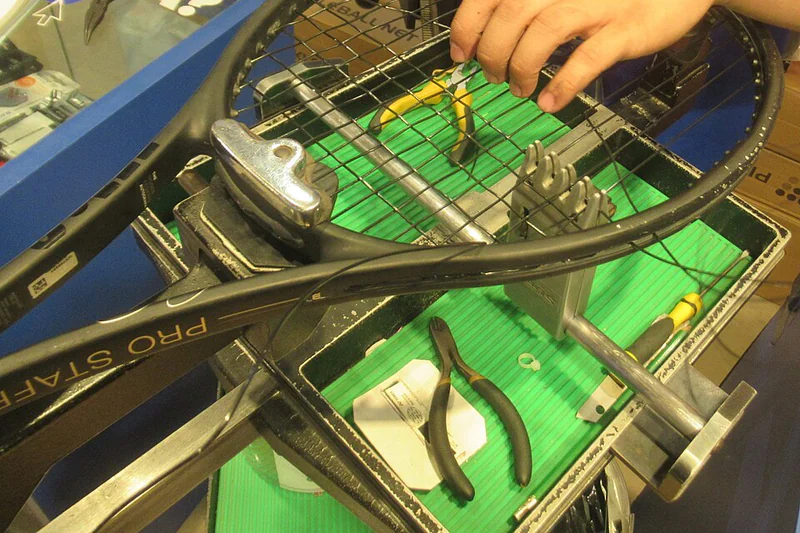
Ask the same stringer to install the pair on the same machine, using the same recorded reference tension and normal method. Record the installation date, exact diameter, colour, main and cross positions, and time already played. Compare two fresh setups with similar use. A new string against one with several previous sessions adds a large difference in playing history to the product choice.
Before hitting, choose tasks that reproduce the situation troubling you. One example is ten controlled crosscourt balls, ten compact return blocks and ten second serves with each setup. These are proposed sample sizes, not performance targets. The point is to repeat the same tasks and keep the observations concrete enough to compare after changing racquets.
- For crosscourt balls, count those reaching the intended depth zone and separately note long or short misses.
- For compact returns, record whether the ball reaches the chosen target without needing an extra swing.
- For second serves, record successful placement in the intended box zone and the type of miss.
- Add a brief comfort note after the same amount of hitting, using ordinary descriptions such as comfortable, tiring or unpleasant.
Change the order on the next comparison: if Co Focus came first, start with Focus HEX the next time. Keep the same ball type and comparable court conditions where practical. A result that changes completely with the order is a reason to repeat that task before buying a reel. The notes should identify an observable difference, such as short returns, rather than an unexplained overall score.

Decide what earns the next string job
Revisit the tasks after comparable playing time and record when depth, control or comfort becomes less useful. Tennis Warehouse’s guide treats restringing as a playability decision as well as a response to breakage. For this comparison, a simple session log can connect the initial impression with the point at which you would choose to replace the string.
Keep price attached to the exact purchase format. Both manufacturer pages list 12 m sets and 200 m reels. Begin with the amount needed for the intended comparison, and ask your stringer for the actual cut lengths required by your frame. Once a preferred setup emerges, compare its local purchase price and labour cost against the useful playing time you recorded.
The next choice follows the result you observed. Retain Co Focus if the round version produces the response you prefer under the same tasks; retain Focus HEX if that setup works better. If the main issue is feel and you want to try Soft or Ultra, create a new order that records their different diameter options and product descriptions. That keeps each purchase tied to a question you can answer.
Sources and further reading
- MSV — MSV Focus Hex® tennis string – spin & control – MSV Tennis
- MSV — MSV Co Focus tennis string – control & spin – MSV Tennis
- MSV — MSV Focus Hex® Soft tennis string – all-round & balance – MSV Tennis
- MSV — MSV Focus HEX® Ultra tennis string – snap-back & control – MSV Tennis
- Tennis Warehouse Europe — MSV Focus HEX 1.23 String - Tennis Warehouse Europe
- Tennis Warehouse — Tennis Strings Explained | Tennis Warehouse
Keep reading

Should a spin string be rough or slippery? You are asking about two different surfaces
A 2016 surface experiment and reversed hybrid measurements reveal two kinds of friction. Use their mechanisms to structure a practical string comparison.
7 min read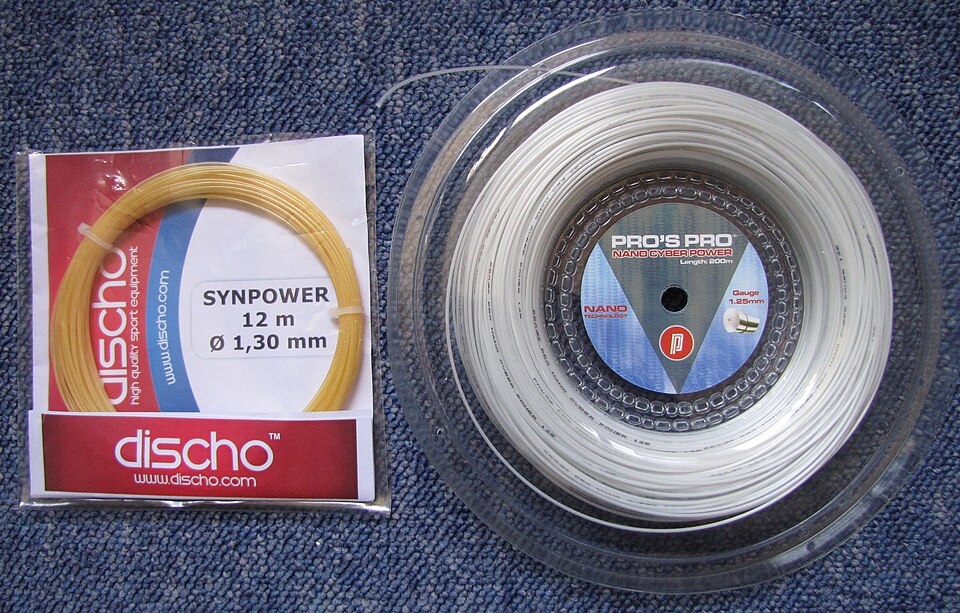
String gauge 1.20 vs 1.25 mm: who should switch and who should wait?
Use Mach-10’s four options and TWU research to choose a gauge through useful ball flight, replacement interval and cost per satisfactory hour.
6 min read
Same gut, same poly—why reversing mains and crosses makes a different hybrid
Reversing mains and crosses changed static friction in two TWU hybrid pairings. Understand the contact mechanisms and retain a useful comparison record.
7 min readTENNIS TENSION LAB
Check your racquet’s tension today.
Get a high-precision tension reading in under 10 seconds. Tension Lab tracks changes from your first reading and helps you see when to restring.
- High-precision tension measurement. Ready in under 10 seconds.
- Track every change in feel. See the full story over time.
- Time to restring? Never leave it to guesswork.