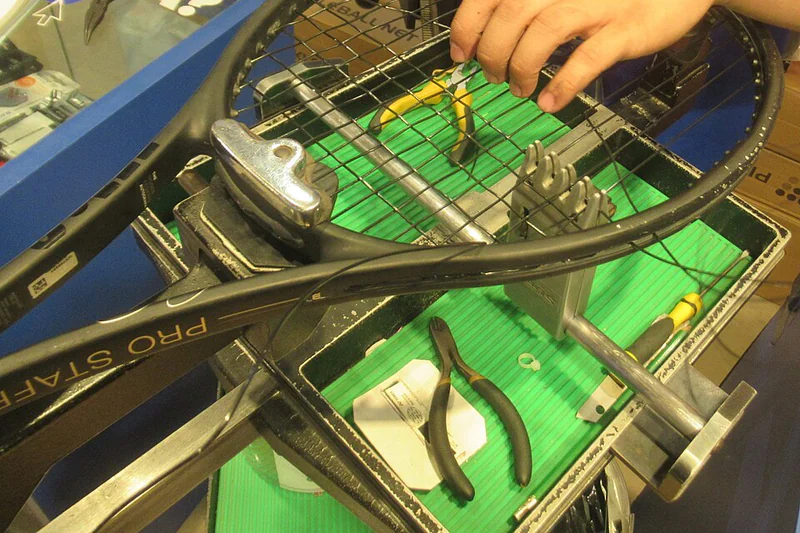
Velocity MLT or RIP Control 1.25? Stiffness and friction point in different directions
RIP Control has the lower measured stiffness; Velocity MLT has the higher friction ratio. Choose the question you want to answer before choosing the string.

RIP Control 1.25 has the lower stiffness value in the matched Tennis Warehouse University report: 137.7 lb/in against 153.2 for Velocity MLT 1.25. Velocity leads the other column considered here, with a spin-potential ratio of 5.5 against 4.2. The two measurements give a player different reasons to put a string on a shortlist. A product name containing “Control” is a poor substitute for deciding which property matters to your next restring.
Both entries are 17 gauge and 1.25 mm, tested at a reference tension of 51 lb using the database’s Fast setting. Matching diameter and stiffness-test conditions makes Velocity MLT and RIP Control a useful comparison when choosing between their different constructions.
Start with the exact row, including the diameter
| Database entry | Material category in TWU | Reference tension / speed | Stiffness, lb/in | Friction ratio |
|---|---|---|---|---|
| Head Velocity MLT 17 (1.25) | Nylon | 51 lb / Fast | 153.2 | 5.5 |
| Head Rip Control 17 (1.25) | Nylon / polyolefin | 51 lb / Fast | 137.7 | 4.2 |
RIP Control’s stiffness value is 15.5 lb/in lower in these rows. That subtraction compares the same property in the same units. Keep the complete model and diameter in your notes: Velocity MLT Power is a different product name, and a thicker RIP Control row answers a different comparison. The material column is TWU’s classification, so it is useful for identifying the record rather than reconstructing the manufacturer’s complete fibre recipe.
For an equipment purchase, the immediate decision is whether you want a candidate with lower measured resistance to rapid stretching or one with the higher listed friction ratio. Those priorities can lead to different first choices. Put your current complaint beside the table: harsh impact, an unpredictable launch, excessive effort to reach depth, or a changing response later in the string’s use. A specific complaint gives each number a job.
153.2 lb/in is a stiffness measurement, not a stringing instruction
TWU describes dynamic stiffness as the force associated with extending a string during a rapid impact. The unit lb/in relates force to extension. By contrast, the 51 lb entry is a reference tension used for the test. Reading the units prevents a large stiffness number from being mistaken for a machine setting. The comparison belongs to the way the tested string responds to loading.
Pulling a loose piece slowly between your fingers asks a different mechanical question. The laboratory measurement concerns a fast event, while a hand pull changes the loading rate and the initial tension. Use the matched data to select a candidate, then evaluate the assembled racquet. Head size, string length, pattern, installation and accumulated use all contribute to the response of that complete stringbed.
If reducing impact firmness is your main priority, RIP Control 1.25 is the lower-stiffness candidate in this pair. That is a reason to try it first under a controlled setup. Keep your usual racquet, grip and ball type, and discuss a familiar reference tension within the frame maker’s guidance with your stringer. Changing the racquet and tension at the same time would make the result much harder to interpret.
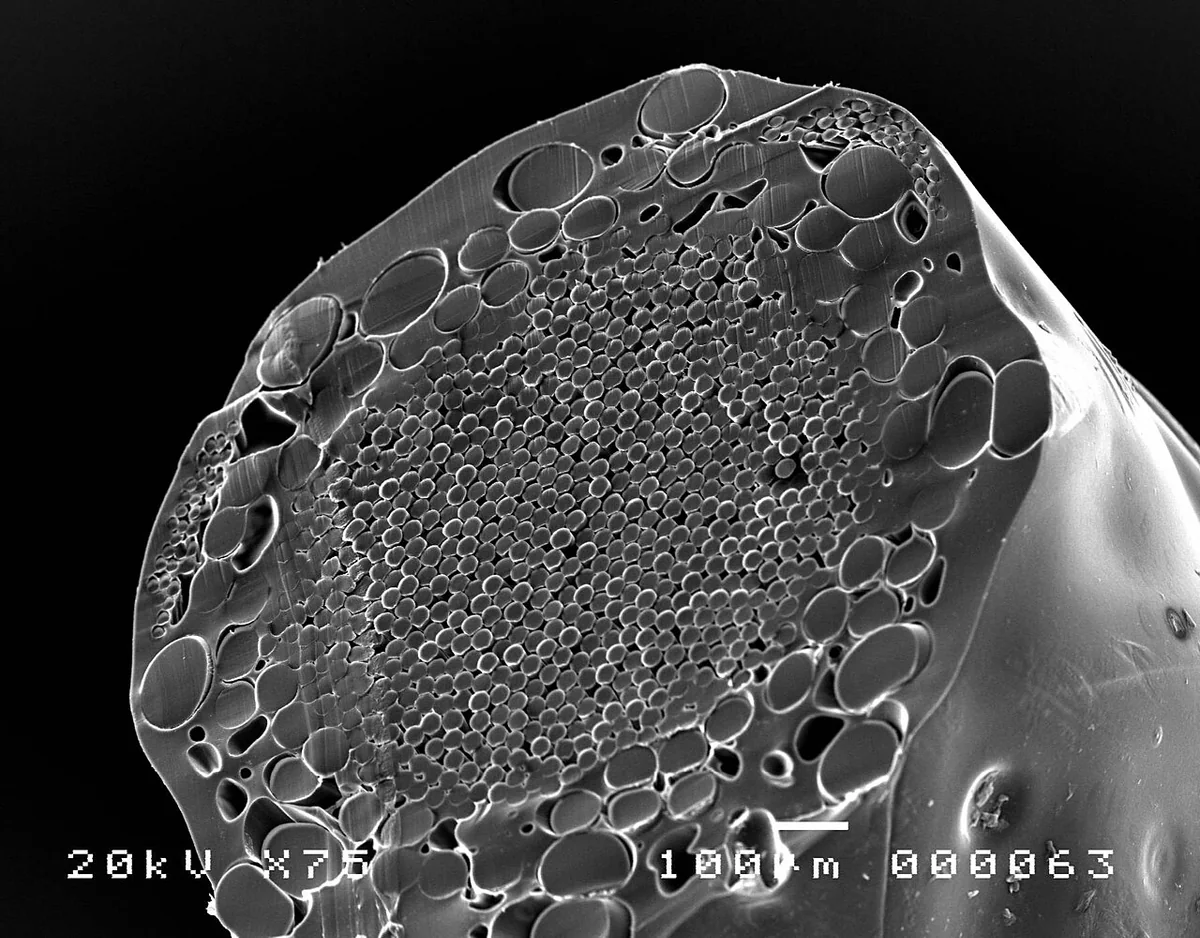
5.5 and 4.2 describe two friction interfaces
TWU defines its spin-potential value as the ball-to-string coefficient of friction divided by the string-to-string coefficient of friction. The numerator concerns the ball gripping the string surface. The denominator concerns the mains sliding across the crosses. A higher ratio combines those two interactions into a dimensionless index. Velocity MLT’s higher value makes it an interesting candidate when you want to investigate that balance within this pair.
TWU defines this index for the same string installed in both mains and crosses. A polyester cross creates a new pair of contacting surfaces, so include the exact pairing whenever you record a hybrid setup.
This explains why a low stiffness value and a high friction ratio need separate columns on your shortlist. Rapid stretching and sliding at an intersection are different physical behaviours. A string can rank ahead on one and behind on the other, as this pair does. If you are happy with impact feel but want to explore a different main-string response, Velocity is the more directly relevant first candidate from these two friction entries.
Make a comparison that preserves the useful difference
Use two similar frames if you already own them, or compare consecutive restringing jobs on the same frame. Record the exact product, diameter, full-bed installation, stringing date, reference tension and any prestretch instruction. Ask the same stringer to keep the installation procedure consistent where practical. This reduces the number of changes competing with the product difference you are trying to observe.
For the first outing, give each setup the same tasks. The following is a proposed observation routine, not a reported laboratory experiment: hit 20 crosscourt groundstrokes towards a chosen deep target, then 10 serves to a chosen service-box target. Use the same feed and intended swing effort. Switch the order of the setups on the next comparable outing to reduce the influence of always trying one when fresher.
| Record | How to record it | What it helps separate |
|---|---|---|
| Groundstroke depth | Target successes __ / 20; short __; long __; net __ | Useful depth from a single best shot |
| Serve target | Target successes __ / 10 at the chosen effort | Placement from a subjective spin impression |
| Impact response | Brief note on centred and off-centre contact | String feel from where you struck the ball |
| Use history | Stringing date, sessions and visible intersection wear | Product identity from the condition of the installation |
Judge the pattern of misses alongside the feel. A softer-feeling setup that sends repeated balls long may need a different follow-up adjustment from a setup that feels firm while leaving balls short. First finish the product comparison at your chosen settings. Then change one setting in the selected setup and repeat the same task. That sequence makes the next restring a response to an observed problem.
Follow the contact points as the strings wear
TWU’s March 21, 2013 repeated-impact study examined tension, stiffness and inter-string friction in nylon and polyester samples. It found that tension-related changes and changes in sliding behaviour can occur together. This gives a useful reason to keep both kinds of observation in your notebook: a stringbed can become easier to deflect while movement at its intersections becomes more restricted.
Inspect the central hitting area after comparable use. Note visible fraying, notches and whether mains frequently remain displaced, alongside any change in your usual depth and impact feel. Date these observations and keep them beside the original installation details. Your notes connect the initial setup to its later condition.

Write the purchase decision as a reason and a next step
A practical first order could read “RIP Control 1.25, full bed, to compare the lower-stiffness candidate at my familiar setup.” Another could read “Velocity MLT 1.25, full bed, to investigate the higher friction-ratio candidate while keeping the frame and installation consistent.” Both give the stringer a clear product and give you a clear observation target. Save the result with the date so the next choice builds on the condition you actually played.
Sources and further reading
- Tennis Warehouse University — String Performance Database — report saved September 8, 2026
- Tennis Warehouse University — String Stiffness: The Alpha and Omega of String Performance
- Tennis Warehouse University — String Spin Potential Tool
- Tennis Warehouse University — How Tennis Strings "Go Dead" — Part 1
Keep reading

Should a spin string be rough or slippery? You are asking about two different surfaces
A 2016 surface experiment and reversed hybrid measurements reveal two kinds of friction. Use their mechanisms to structure a practical string comparison.
7 min read
String gauge 1.20 vs 1.25 mm: who should switch and who should wait?
Use Mach-10’s four options and TWU research to choose a gauge through useful ball flight, replacement interval and cost per satisfactory hour.
6 min read
Same gut, same poly—why reversing mains and crosses makes a different hybrid
Reversing mains and crosses changed static friction in two TWU hybrid pairings. Understand the contact mechanisms and retain a useful comparison record.
7 min readTENNIS TENSION LAB
Check your racquet’s tension today.
Get a high-precision tension reading in under 10 seconds. Tension Lab tracks changes from your first reading and helps you see when to restring.
- High-precision tension measurement. Ready in under 10 seconds.
- Track every change in feel. See the full story over time.
- Time to restring? Never leave it to guesswork.