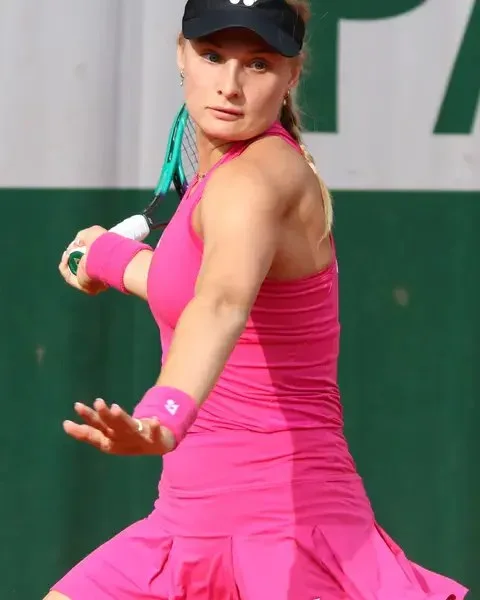
Dayana Yastremska won three qualifying matches and five main-draw matches at the 2024 Australian Open to reach her first major semifinal. The 23-year-old beat Linda Noskova 6-3, 6-4 on January 24. She became the first women’s qualifier to reach the Australian Open semifinals since Christine Dorey in 1978.
The run began with demanding matches. On January 10, she needed two hours and seven minutes to beat Lea Boskovic 6-3, 4-6, 6-3 in her qualifying opener. WTA’s January 24 review reported that all three qualifying wins went to three sets. By contrast, she dropped only one set across her first five main-draw matches.
Her opening main-draw opponent was Wimbledon champion and seventh seed Marketa Vondrousova, against whom she lost just three games. In the third round she beat recent Hobart champion Emma Navarro, then defeated two-time Australian Open champion Victoria Azarenka in the last sixteen. She had lost their previous two meetings but won this one in straight sets.
The Noskova quarterfinal lasted one hour and eighteen minutes. Yastremska broke for a 5-3 lead in the opening set before closing it out and made another decisive break at 3-3 in the second. Both players looked to strike early in rallies, and Yastremska turned those opportunities into leads she protected.
Qinwen Zheng ended the run 6-4, 6-4 in the January 25 semifinal. Yastremska led 2-0 in the opening set before Zheng recovered, and she received a medical timeout for abdominal discomfort. Before the semifinal she had converted 21 of 38 main-draw break points; against Zheng she converted two of ten. Her ability to create chances and her return from those chances diverged at the decisive stage.
Yastremska entered the tournament ranked No.93 and earned A$990,000 for reaching the last four. The tournament’s January 26 report projected a rise to No.29 in the following week’s rankings. She explained that a higher ranking would let her plan entries and rest periods more confidently. After nine matches including qualifying, the reward included greater control over her schedule.
There was established tour experience behind the resurgence. She had won three WTA singles titles before turning twenty and reached a career-high No.21 at nineteen. Melbourne became a case of an experienced title winner building another route through qualifying. The contrast between three long qualifying battles, more efficient main-draw progress and the final match’s missed opportunities explains how the semifinal run developed.