Nylon with a metal film: how DYNAWIRE differs from REXIS COMFORT
The official table checked October 19, 2026 lists nylon monofilament and metal film for DYNAWIRE, versus nylon multifilament and FORTIMO for REXIS COMFORT. Both offer 1.25 and 1.30 mm.
Choose material, gauge and main–cross combinations, then track changes after first use. Record installation dates and playing time to guide the next adjustment.
Algunos artículos se ofrecen en su idioma original. Cada enlace indica el idioma. 한국어 · English · 繁體中文
Comentar →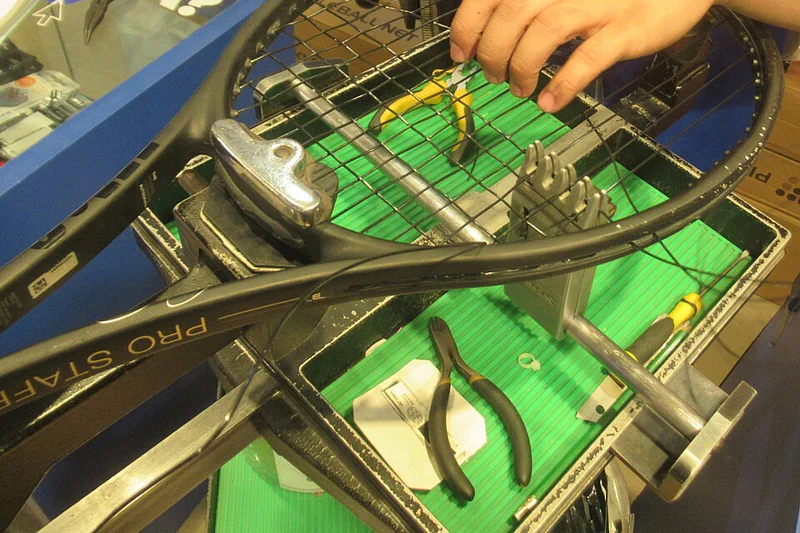
The official table checked October 19, 2026 lists nylon monofilament and metal film for DYNAWIRE, versus nylon multifilament and FORTIMO for REXIS COMFORT. Both offer 1.25 and 1.30 mm.
MSV’s description reviewed on October 19, 2026 compares elasticity with the base model. Diameters are 1.20, 1.25 and 1.30mm, in 12m sets or 200m reels.
Grapplesnake specifications checked October 19, 2026 list square Game Changer at 1.20 mm and pentagonal Tour Sniper at 1.25 or 1.30 mm, making profile part of the gauge comparison.
Solinco’s October 19, 2026 listings show four standalone Round gauges from 1.15 to 1.30 mm. The Hyper-G pair offers 1.20 and 1.25 mm with two direction choices.
The 17-gauge listing checked October 19, 2026 specifies 1.25 mm, 12 m and grey. Co-extrusion places elastic inner material within a translucent polymer matrix.
Wilson’s specifications checked October 19, 2026 classify NXT Control as a multifilament combining polyester and nylon microfibres with polyurethane.
Yonex’s official table checked October 19, 2026 lists 1.20 and 1.25 mm for both strings. REV also offers 1.30 mm and is described with a silicone-oil infusion process.
Yonex’s US specifications, checked October 19, 2026, list nylon multifilament, 1.25 mm / 16L and model RTGA125. FRF, plasma bonding and FORTIMO address different parts of its construction.
Babolat’s October 19, 2026 pages describe low-density co-polyester for Team and a rough, high-density construction for Rough. Both listed sets are French-made 12 m monofilaments.
Wilson’s official table checked October 19, 2026 lists 16 gauge at 1.34 mm. The Thai official listing gives the red 17-gauge set as 1.28 mm and 12.2 m.
Diadem compares feel and tension retention with Solstice Power. Reel specifications reviewed on October 19, 2026 list five diameters from 1.15 to 1.35mm.
Tennis Warehouse’s August 2007 review compared String Port and String Hole inserts. On a used frame, the installed and included replacement parts are worth checking first.
Solinco’s configuration checked October 19, 2026 pairs polyester monofilament Tour Bite with polyamide multifilament Vanquish. Standalone Vanquish has three gauge options.
Toroline’s official pairing, checked October 19, 2026, uses neon-green WASABI mains and neon-blue WASABI X crosses: matching material and gauge, different profiles and assigned directions.
Babolat’s specifications checked October 19, 2026 list 100% polyamide across all three components. Xplore is a 12 m multifilament made in France.
Toroline lists a hexagonal original and a pentagonal SPIN model. The change in name is accompanied by a different profile.
Tennis Warehouse describes a solid core surrounded by heat-resistant polyamide fibres. Separate material, construction and diameter, then record useful playing time.
Polyester’s firm, low-powered response can suit fast swings. Players who rarely break strings should compare feel, tension maintenance and replacement demands first.
Choose material and construction, then compare diameter in millimetres. A decision guide for synthetic gut, multifilament, natural gut and polyester.
Two USTA cases published on August 27, 2026 describe a 25-second window to borrow a racquet. A receiver’s change after a first-serve fault also affects the restart.
Elige la tensión inicial, interpreta la primera caída y decide entre continuar, ajustar el próximo encordado o sustituir. Los valores ficticios de la app se identifican como estimaciones.
8 min de lectura
Un experimento sobre temperatura y cordaje explica por qué enfriar la raqueta después de guardarla con calor puede no devolverle su tensión anterior, y por qué hay que leer con cuidado los porcentajes de pérdida.
7 min de lectura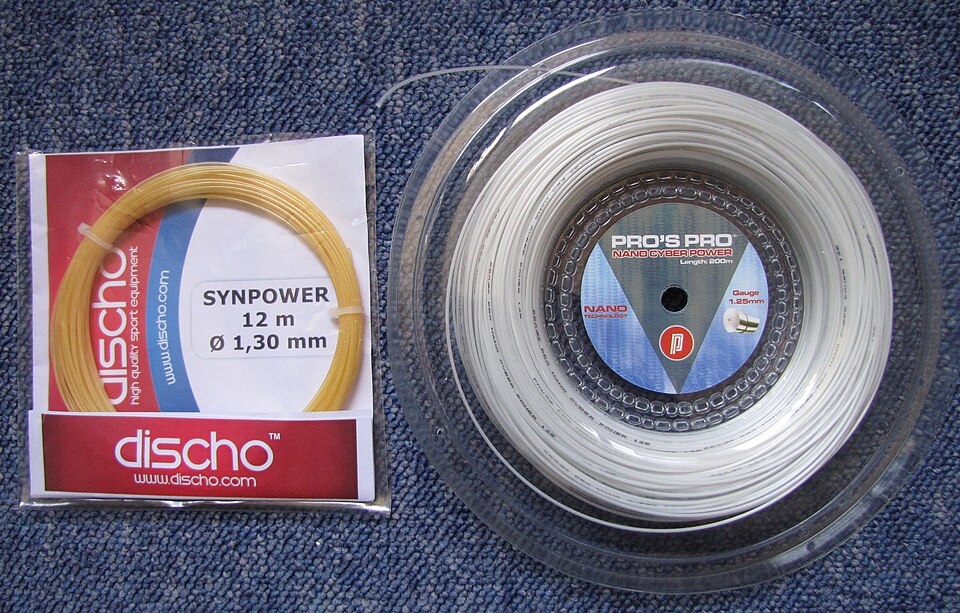
Un cordaje más fino no es necesariamente más blando ni genera más efecto. Distingue diámetro, rigidez en el impacto y horas de juego satisfactorio antes de elegir calibre o comprar una bobina.
8 min de lecturaTripa en verticales y poliéster en horizontales no es lo mismo que al revés. Mediciones históricas de rozamiento explican por qué importa el orden y qué anotar al comparar híbridos.
9 min de lecturaLa resistencia a la rotura y la vida útil en pista no son lo mismo. Cómo comparar poliéster, multifilamento y nylon sin confundir duración con ahorro.
7 min de lectura
El agarre entre pelota y cuerda y la fricción entre verticales y horizontales cumplen funciones diferentes. Cómo interpretar las promesas de efecto, los ensayos de híbridos y el movimiento visible del cordaje sin confundirlos.
8 min de lecturaLa caída de tensión no explica por sí sola el desgaste del poliéster. Cómo distinguir deformación, fricción entre cuerdas y cambios de trayectoria antes de volver a encordar.
7 min de lectura
Qué puede aprender un jugador avanzado del ensayo de Draper: rigidez, vida útil y comparación de cordajes sin copiar una receta profesional que no conocemos.
8 min de lectura