Rules on court
Work through abandoned tosses, corrected out calls and partner calls in doubles. Apply scoring, service-order and hindrance conditions to concrete situations.
Einige Artikel sind in ihrer Originalsprache verfügbar. Die Sprache steht am jeweiligen Link. 한국어 · English · 繁體中文
Darüber diskutieren →
Publication and correction timeline
Source publication, publication on this site, updates and corrections for articles linked to this topic. These are not the times when matches or real-world events happened. Titles and links point to current article editions, not reconstructed historical drafts.
When can a doubles team change its serving order?
Clarified the service-let exception when a serve touches the net assembly before a receiver, including which serve is repeated.
Sources linked to this article · 2
Q versus LL: how a player can lose in qualifying and enter the main draw
The source publication date recorded for this article. It does not mean that every linked source below was published on this date.
Sources linked to this article · 3
ATP Finals: why two group wins can still leave a player out
The source publication date recorded for this article. It does not mean that every linked source below was published on this date.
Sources linked to this article · 2
ATP Finals: why two group wins can still leave a player out
The date this site published the article, separate from the date of a match, study or event it discusses.
Sources linked to this article · 2
ATP Finals: why two group wins can still leave a player out
Updated Korean names and terminology, wording or event context where applicable.
Sources linked to this article · 2
Broken ball or soft ball? USTA explains when to replay the point
The date this site published the article, separate from the date of a match, study or event it discusses.
Sources linked to this article · 1
Broken strings: the backup-racquet clock and a receiver’s first-serve restart
The date this site published the article, separate from the date of a match, study or event it discusses.
Sources linked to this article · 2
When can a doubles team change its serving order?
Added a four-player sequence, fixed receiving sides, new-set choices and partner-contact rulings.
Sources linked to this article · 2
Nardi lost to Fucsovics in qualifying, then beat him in Dubai’s main draw
The date this site published the article, separate from the date of a match, study or event it discusses.
Nardi lost to Fucsovics in qualifying, then beat him in Dubai’s main draw
Updated Korean names and terminology, wording or event context where applicable.
Q versus LL: how a player can lose in qualifying and enter the main draw
The date this site published the article, separate from the date of a match, study or event it discusses.
Sources linked to this article · 3
Q versus LL: how a player can lose in qualifying and enter the main draw
Updated Korean names and terminology, wording or event context where applicable.
Sources linked to this article · 3
Deuce and tiebreaks: two different scoring situations
Added deuce sequences, tiebreak service and end changes, and deciding-set examples.
Sources linked to this article · 1
Service lets and foot position
Added bounce conditions, which serve to repeat, baseline contact and service-position examples.
Sources linked to this article · 1
What does WC mean in tennis? A wild card can also be earned
The date this site published the article, separate from the date of a match, study or event it discusses.
Sources linked to this article · 2
One serve for pros, two for amateurs: Wrexham’s one-point route to Melbourne
The date this site published the article, separate from the date of a match, study or event it discusses.
Sources linked to this article · 1
When can a doubles team change its serving order?
The date this site published the article, separate from the date of a match, study or event it discusses.
Sources linked to this article · 2
When can a doubles team change its serving order?
Added a Traditional Chinese edition. Existing Korean and English content and reference dates are unchanged.
Sources linked to this article · 2
Deuce and tiebreaks: two different scoring situations
The date this site published the article, separate from the date of a match, study or event it discusses.
Sources linked to this article · 1
Deuce and tiebreaks: two different scoring situations
Added a Traditional Chinese edition. The existing Korean and English text and source reference dates are unchanged.
Sources linked to this article · 1

Michael Changs Aufschlag von unten war kein Ass
Changs berühmter Aufschlag von 1989 führte erst über Lendls Return zum Punkt. Was der folgende Passierball über brauchbare Überraschungstaktik verrät.
7 Minuten Lesezeit
Kann eine Wildcard gesetzt sein? Diese Ranking-Termine zählen
Eine Wildcard kann einen Setzplatz erhalten. Warum Grand Slams für Zulassung und Setzliste unterschiedliche Ranglisten verwenden – mit Beispielen zum Lesen des Turnierplans.
8 Minuten Lesezeit
Sie dürfen den Ballwurf abbrechen. Warum schlagen Sie trotzdem?
Einen aufgegebenen Ballwurf aufzufangen ist etwas anderes, als beim Aufschlag ins Leere zu schwingen. Kennen Sie die Regel, halten Sie das Spiel in Gang und trainieren Sie die Entscheidung vor dem teuren Doppelfehler.
8 Minuten Lesezeit„Aus“ zu „gut“ korrigiert: Wird der Punkt wiederholt oder ist er schon verloren?
Eine korrigierte Aus-Entscheidung hat unterschiedliche Folgen, je nachdem, ob sie vom Spieler oder von einem Offiziellen stammt. Der USTA-Code erklärt Punktverlust, Uneinigkeit im Doppel und die besondere Ausnahme beim Netzaufschlag.
8 Minuten Lesezeit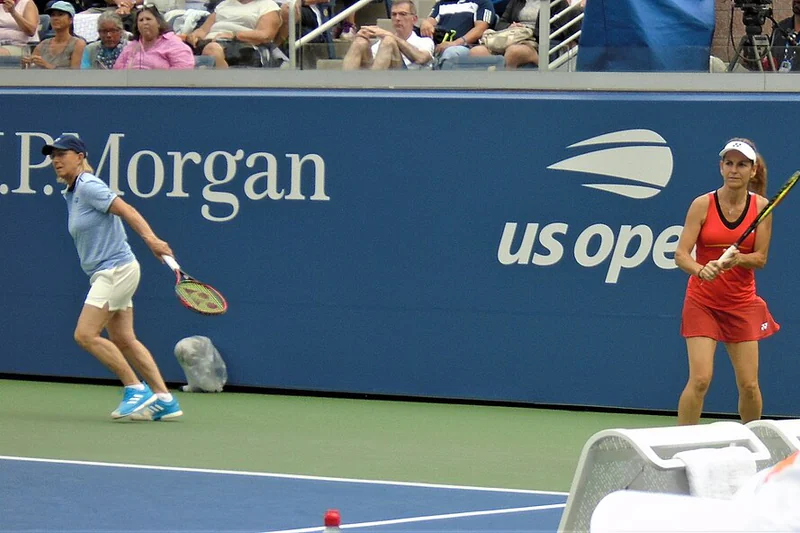
Sie rufen Ihrem Doppelpartner „Zurück!“ zu. Warum kann das den Punkt kosten?
Das USTA-Beispiel eines zu kurzen Lobs erklärt, wann Doppelkommunikation zur absichtlichen Behinderung wird, weshalb eine verspätete Reklamation scheitert und warum Stöhnen und unwillkürliche Schreie anders behandelt werden.
8 Minuten Lesezeit