Take it to the court



Rules quiz
Choose your answers. Results are shown only here and are not submitted or collected.
Rules and news
14
 WC in Tennis: Wild Cards, Q & LL ExplainedWC means wild card in tennis. Learn how it differs from Q (qualifier) and LL (lucky loser), and why each player gets a place in the main draw.4 min read
 Live Rankings and the Season Race Are Not the Same NumberOne shows a player's position over roughly the latest 52 weeks; the other tracks that season's results and qualification race for the tour finals.4 min read
 Why a Returning Player With a Low Current Ranking Can Enter a Major EventA protected ranking helps a player who meets conditions such as a long-term injury apply for entry using an earlier reference position.5 min read
- How Can a Player Win a Tournament and Still Fall in the Rankings?New points are added as points from roughly 1 year earlier come off, and the number of events counted also depends on the rules.5 min read
- The Trap in Comparing Career-High Rankings Across ErasThe official ATP rankings began in 1973 and the WTA computer rankings in 1975, so earlier players do not appear in an equivalent table.5 min read
- Racquet, Injury, and Retirement Rumors Spread Fast—What Should You Verify First?A single player photo and a sentence from an anonymous account do not carry the same weight as an official announcement or verified reporting.4 min read
 Is the Surface Name Enough to Call a Court Fast?Even hard courts can feel different because of surface friction, the ball, temperature, altitude, and tournament maintenance.5 min read
- 250, 500, 1000, and Grand Slam: Understanding Tournament LevelsMen's tour labels are tied to the champion's points, but the women's tour and detailed point allocations require their own official tables.5 min read
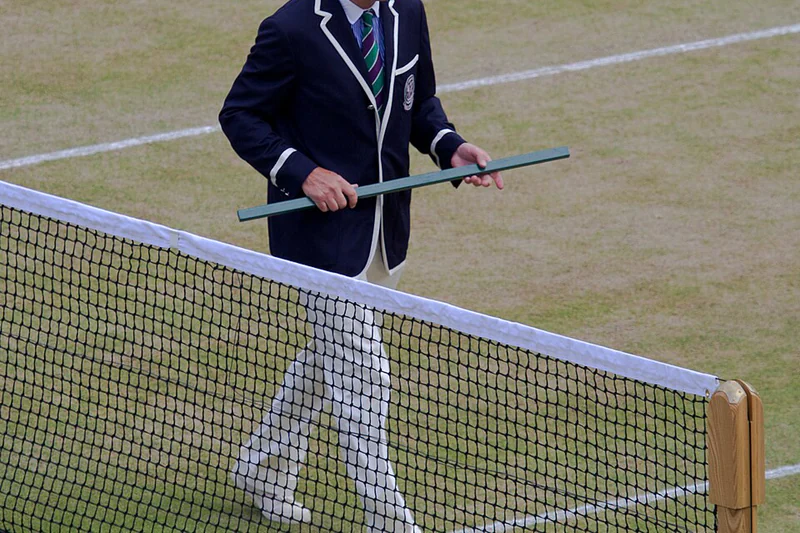 When an Opponent Shouts as You Hit: The Core of the Hindrance RuleIntentional and unintentional hindrance can lead to different outcomes, so feeling distracted alone does not decide the ruling.4 min read
- Why an Uncertain Ball Is In During Self-Officiated PlayDo not call balls on the opponent's side, and call out only the balls you clearly see out on your side.4 min read
- When May Your Racquet Cross Over the Net?Ordinarily you must strike the ball on your side, but after it bounces in your court and spins or blows back, you may reach over the net to hit it.4 min read
- Love, Deuce, and Tiebreaks: Tennis Scoring at a GlancePoints make a game and games make a set, with distinct rules after 40-40 and in a tiebreak.5 min read
- When Do You Replay a Serve That Touches the Net?A service let is replayed, but a rally ball that touches the net and lands in remains in play.3 min read
- Is a Stray Ball on Court Always a Let?Call a let immediately when it creates a safety hazard, but do not use it to reverse a result after the point has ended.4 min read